Headaches

This month I’m going to talk about the main causes of headaches and how osteopathy can help. Most people suffer with a headache at some point in their life. Thankfully for most of us these episodes tend to be relatively short lived. However, for some people headaches can become a chronic condition, which cause debilitating pain.


What is a headache?


AHeadache is defined as pain in the head that is located above the eyes or the ears, behind the head (occipital), or in the back of the upper neck. Headaches have many causes.

What are the causes of headaches?


There are a variety of causes, including those caused by tension in the muscles, migraines, eye strain, sinus congestion, pre-menstrual syndrome, hypertension or in severe but rare cases, tumours or meningitis. Research has shown that about 90% of headaches are caused by muscle tension or migraines. The head has a number of pain sensitive structures including the scalp, muscles, arteries, sinuses, ears and teeth. Often people think of the brain as being the cause of a headache, but interestingly the brain has very little sensitivity to pain. At the Osteopathic Clinic I take a detailed case history of the onset, duration and associated symptoms and do thorough clinical examinations to establish the cause of the headache.


Tension Headaches


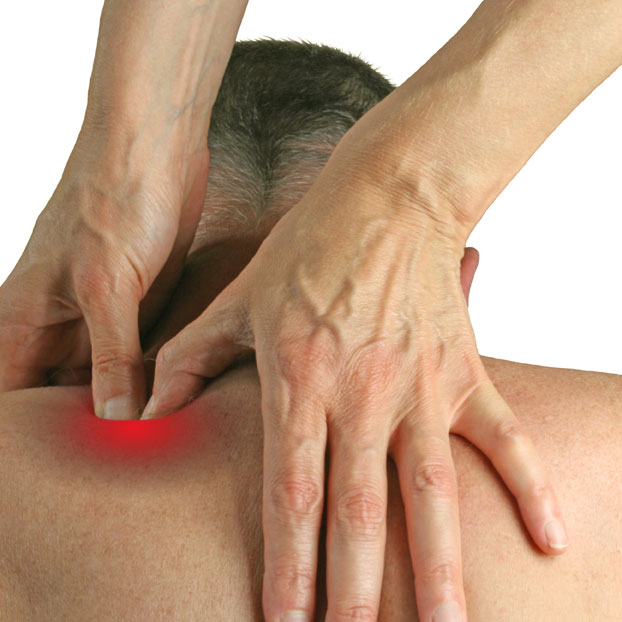
Tension headaches are the most common form of headache. They relate to muscle tension in the back, neck and head, commonly caused by stress and posture. This is where osteopathy can offer most help. Many of the muscles of the head and neck have been shown to refer pain to other locations. For example tension at the base of the skull can produce pain locally as well as refer pain to the forehead and eye area. The tightened muscles and joint restrictions (from poor posture, stress, injury, etc) in the upper neck, contribute to reduced mobility and irritation of local nerves and blood vessels.

An osteopath will work gently with your body to improve joint mobility, reduce muscular and nerve irritation, improve blood supply and drainage to and from the head and neck. Your osteopath can also help prevent future headaches by giving you advice on posture, exercises and stretching.


Migraine Headaches


Migraine headaches are more complex, with the main feature being a more severe headache. Other symptoms can include visual disturbance, tingling in the face, photosensitivity (sensitivity to light), strange smells, nausea and vomiting. The cause of migraine headaches is not fully understood. It is thought to be due to a combination of circulatory and neurological factors. Although the exact cause is unknown researchers have found a number of triggers, which often stimulate migraines. These can include: dietary, hormonal, structural and stress. Osteopaths can help identify and treat the structural triggers involved in causing migraines. Patients I have treated who suffer with migraine headaches often report a very pleasing reduction in severity and frequency of their headaches.


tristan-edited-150x150

Tristan Hill B.Ost

Osteopath

Frozen Shoulder

Following on from last month’s column I’d to discuss a more specific cause of shoulder pain and stiffness- frozen shoulder. In medical terms this is known as Adhesive Capsulitis. It is condition that is relatively poorly understood, with many people being diagnosed with frozen shoulder incorrectly.


It differs from many shoulder conditions in that the restriction of shoulder is usually in all directions, not just painful in one or two. It also has three distinct phases:


Symptoms often interfere with everyday tasks such as driving, dressing, or sleeping. Even scratching your back, or putting your hand in a rear pocket may become impossible. Work may be affected in some cases. There is great variation in the severity and length of symptoms. Untreated, on average the symptoms last 1-2 years in total before going. In some cases it is much less than this. In a minority of cases, symptoms last for several years.


As the medical name suggests, the cause for this level of pain and stiffness seems related to the capsule or bag surrounding the ball and socket joint in the shoulder, in which the tissue within the back becomes inflamed and thickens. This sometimes follows trauma but for many the cause is unknown.

Treatment is aimed at reducing the level of pain with muscle stretching, massage and exercise, and is ultimately aimed at reducing the resulting restriction of movement once the pain subsides.


As with all medical conditions a correct diagnosis is of paramount importance for the appropriate treatment and management of the condition. For more information on the clinic, to discuss a particular case, or to book and appointment please call Tristan Hill on 07835596870


tristan-edited-150x150

Tristan Hill B.Ost

Osteopath

Driving Positions

This month I’ll be discussing the perils of long distance driving and poor driving posture. With driving times increasing for the average user everybody should be aware of the risks.


Prolonged Sitting/ Poor Posture: after a long time behind the wheel you gradually begin to slump within your seat, which puts increased pressure on the discs in your spine and weakens the muscles. This makes you more prone to problems such as ‘slipped’ or prolapsed discs’.

Car ergonomics: the design and set-up of your car can also have an impact. Be aware of having your seat too low as more strain is put on your low back in this situation, the seat should also be the correct inclination and distance from the steering wheel and pedals.


Repeated Braking: frequent sharp braking and deceleration can cause repeated stress to the soft tissues of the neck and spine. Road vibration can shock the muscles and ligaments. These can give rise to headaches and shoulder pain.


Manual Handling: lifting heavy luggage in and out of cars in a forward leaning posture, or twisting the upper body to set the luggage down puts increase torsion on the back and can lead to muscle, joint and ligament strains. The back is most vulnerable when you first exit a seating position so be careful at this time.


So, what should you do?

o Don’t let your back become rounded. Wriggle back into the seat so your hips make firm contact with the seat back. If your chair has a lumbar support use it.


o Don’t poke your chin forward or hunch your shoulders.

o Make sure your seat is in a position where you can keep your knees and elbows slightly bent – being forced to stay straight is not a good idea!

o Take regular breaks if you know the journey will be a long one, go for a short walk and gradually stretch your back and limbs in all directions.

o If you have a niggle in your back when driving don’t ignore it, it’s unlikely to spontaneously resolve, especially if you drive regularly.


As with all medical conditions a correct diagnosis is of paramount importance for the appropriate treatment and management of the condition. For more information on the clinic, to discuss a particular case, or to book and appointment please call Tristan Hill on 01949 839 238

tristan-edited-150x150

Tristan Hill B.Ost

Osteopath

Carpal Tunnel Syndrome

Welcome for all you new readers, and hello to all the people who frequent my column each month. My name is Tristan Hill, I’m an osteopath practicing in Bingham. This month I’d like to discuss another common complaint with you, Carpal Tunnel Syndrome, a horribly irritating condition that is very debilitating to the sufferer.


First off, what is it?

The carpal tunnel is the arch of bone that is formed from the carpal or wrist bones, of which there are eight. The arch formation is held together by a strong structure called the Transverse Carpal Ligament, (pictured below) which also serves to hold all your tendons in your wrist, along with the blood vessels and nerves.


There are so many structures packed into this small space that there is a lot of possibility of compression on the weaker structures, the most common of these being the Median nerve. When this nerve is compressed it causes tingling in the fingers, which can even develop into pain. It is most common in females, and is even more common during pregnancy, however males do suffer it as well. Symptoms are most commonly felt at night with a desire to shake ones hands and wrists, which can relieve the pain. However any period of rest is likely to see the symptoms return as the stasis allows swelling and pressure to build.


There are many causes for the carpal tunnel to narrow. Most are related to inflammation around tendons and ligaments in the wrist through repetitive strain. If the forearm muscles that move the wrist and fingers are too tight for long periods the tendon-coverings will become inflamed and swell causing pressure. This type of irritation is usually treated very successfully with Osteopathy, where we would look to massage the muscles and improve the movement of the wrist. Acupuncture can also help to reduce the swelling initially. For more severe cases or where a more lasting compression is causing symptoms surgery or injection can help, however physical therapy is still recommended to reduce early causative factors.


For more information on the clinic, to discuss a particular case, or to book and appointment please call Tristan Hill on 07835596870 or e-mail tristan-hill@hotmail.co.uk. Please feel free to visit www.binghamosteopath.co.uk


tristan-edited-150x150

Tristan Hill B.Ost

Osteopath

Asthma

Welcome once again to my monthly column where we set the medical world to rights. This month I thought I’d move away from our usual discussion of musculo-skeletal woe and discuss asthma!

5.4 million people in the UK, of which 1.1m are children, are currently receiving treatment for asthma. That’s 7% of the adult population, and up to 15% of the children of Great Britain.

For of those that don’t understand asthma, I’ll explain. It’s where an irritation to the mucus membrane of the lung causes inflammation, this leads to swelling and causes the muscles making up the lung walls to contract, narrowing the airways. In many cases this also triggers an excessive production of mucus, which causes further restriction to airways.

The most common symptoms are wheezing, coughing, shortness of breath and tightness across the chest, however not every individual will show all of these symptoms at anyone time. An asthmatic episode or attack can be triggered by a myriad of causes with varying potency. Examples include, animals, air pollutants, colds/ viruses, emotions, exercise, food, medicine, weather, and many more….

Many are able to manage their symptoms by avoiding obvious triggers, particularly when they have a mild presentation, however for most others medical intervention is needed. This comes in several forms, preventative inhalers, which are used prior to obvious triggers, relieving inhalers that help cut an attack short if the sufferer feels breathless, or steroid tablets, which are usually for more severe sufferers and only to be taken in short courses under a doctors supervision.


An important area many asthma sufferers fail to address is the physical changes asthma can cause to the body. Over many years of minor or major attacks, an altered breathing pattern develops causing the chest to expand largely in the upper section with a reduced involvement of the main muscle of breathing, the diaphragm. The diaphragm sits at the base of the ribs and descends into the stomach region to increase the size of the lungs drawing air in, as it relaxes it pushes air out. In asthma suffers you see a much smaller diaphragm movement which causes the neck and shoulder muscles to lift the upper ribs higher eventually causing tightness in the neck and shoulders, which can make a minor asthma attack feel more problematic than it might of otherwise. Correct breathing training and a good stretching routine can greatly improve the situation, whilst improving the posture and movement through the spine and ribs can give the chest a much more fluid and flexible feel. Well, what do you know, I’m talking about joints and muscles again, sorry, I just can’t help it, I am an Osteopath after all.


tristan-edited-150x150

Tristan Hill B.Ost

Osteopath
AdobeStock_119546948_Preview

Arthritis

Welcome to all! This month we will be discussing ‘arthritis’. At this time of year many of the older generation begin to suffer more with joint pain and stiffness. Those who suffer with a ‘dodgy’ knee or a ‘trick’ hip do not look forward to the cold, damp mornings of winter in the UK. For those that can afford it, a short flight to the Costa del Sol or a long trip to the southern hemisphere is exactly what the doctor ordered for a bit of light relief, and a chance to look browner than most in March. I refer of course to a small minority of a large group of people who suffer the dreaded ‘arthritis’. Around 15% of our ageing population have arthritis or related conditions and in 1999-2000, 206 million working days were lost in the UK due to incapacity. So if you suffer, you’re not alone!

There are around 100 different types of arthritis (‘arthr’ means joint, ‘itis’ means inflammation), yet many are very poorly understood. Osteoarthritis (osteo-arthr-itis, bone-joint-inflammation), however, is known to be produced by years of stress and injury to the musculoskeletal system. For the most part, this arthritis is caused as a result of ageing. But as everyone knows, if you use parts of your body at home, or at work a lot, it may increase your chance of joint pain. For example runners suffer knee pain, and typists suffer hand and wrist pain. So what can one expect from arthritis;


1. Joint pain is the first symptom noticed by most people suffering from arthritis. This pain is generally persistent and can be aggravated by excessive movement or activity. Even writing, getting up from a chair, walking, typing, throwing a ball, holding an object, or turning a key can cause the problem to flare. Often muscle tightness or over protecting the painful joint in the early stages after an injury may increase risk of further pain.


2. Inflammation is another early arthritis symptom. Inflammation of the joint is characterized by stiffness, swelling, redness, and warmth. The body responding to the irritated joint causes this arthritis symptom and is actually a normal reaction, but can occasionally leave the patient wary of over working the joint or putting weight on it.


3.Another arthritis symptom, joint deformity, leads to more permanent changes and swelling to the affected joints. This often occurs, for example in the hand where fingers may look crooked, or in the knee where the joint appears larger. This is the body laying down more bone tissue in an attempt to stabilise the joint. As a result, the person suffering from arthritis is unable to use the affected area in the same way as before the arthritis set in. As you can imagine this is an arthritis symptom that shows up in the later stages of the condition


4.Those with arthritis typically have a loss of the range of motion in the affected area. A person with arthritis in the shoulder for example, may not be able to lift his or her arm higher than a certain point. This may be related to deformity or may because of tightened muscles and tissues around the joint.


How can osteopathy help? Well, unfortunately with the majority of arthritis, once the damage is present it is very unlikely to reverse itself, particularly as one gets older. However, osteopathy can help with 3 of the points above. Pain, swelling and range of movement. Using treatments such as massage, acupuncture, stretching, and mobility exercises I have had positive results with patients of all ages and stages of degeneration.

If you are concerned about arthritis or any other unexplained pain please call me on 07835596870 for a more specific chat or to make an appointment.


tristan-edited-150x150

Tristan Hill B.Ost

Osteopath
AdobeStock_119546948_Preview

Introduction to Osteopathy

Let me take this opportunity to introduce myself. My name is Tristan Hill and I’m the osteopath practicing at Bingham Osteopathic Clinic. Osteopathy is a medical profession that many have heard of, but a relative few have had first hand experience with.

Before I talk about osteopathy in the present, let me fill you in on its past. Osteopathy was founded in America in 1874 by Dr Andrew Taylor Still, a frontier doctor. Medicine was very much in its infancy, drugs were ineffective and if you were lucky enough to survive surgery without anaesthetic then you often died of an infection.

As time went on Dr Still followed a different path from many of his peers avoiding alcohol and administering crude drugs. This drove him to seek new methods of treatment. The outcome of his research was application of physical treatment as a specialized form of treatment for which he coined the term ‘Osteopathy’. In 1892 Dr Still organized a school in Missouri, for the teaching of osteopathy and it was from these small beginnings that osteopathy was brought to the United Kingdom. The first school of osteopathy was set up in London in 1917, the British School of Osteopathy, and this is where I completed my training. In 1998 every osteopath who wished to be known as an osteopath had to join the statutory register.

The register was established by the General Osteopathic Council to maintain standards in the profession, and therefore increase public safet Well, what can you expect on a visit to Bingham Osteopathic Clinic? The first consultation can last up to an hour, and I’ll start by taking a full medical history from you. Once I’ve established some possible causes of your symptoms I will take you through some simple movements and then assess your joints whilst you sit or lay down. This should further clarify key areas specific to your complaint, which will then be explained to you.

If it is then suitable to do so I will treat the areas using massage, joint movement and when necessary may manipulate problem areas. At the close of treatment I feel it very important to put some emphasis of control in the patients hands, and often give exercises to promote further healing.

If you are interested in learning more or wish to make an appointment please e-mail me at tristan-hill@hotmail.co.uk or telephone 01949 839 238, and don’t forget to catch up with my monthly column where I’ll try to explain some more common symptoms I see regularly in clinic, next month, Low Back Pain!! Tristan Hill B.Ost

tristan-edited-150x150

Tristan Hill B.Ost

Osteopath
AdobeStock_119546948_Preview

FAQs

So what do osteopaths treat?
Osteopaths treat all areas of the body from head to toe. We generally focus on the musculo-skeletal structures in the body, such as the bones, joints, ligaments and muscles.

What can I expect from an Osteopathic consultation/ treatment?

When you visit Bingham Osteopathic Clinic you will undergo a full musculo-skeletal health check. The consultation starts with an in depth history into when the pain started, what type of pain you’re in, where the symptoms are located etc.

We are also interested in any medical problems and procedures you have had or are having as these may have an effect on your symptoms. Once we have narrowed down the likely causes of your pain we will examine you.

At this stage we generally ask patients to dress down to a level they are comfortable with, certain areas may be more or less important depending on your symptoms.

Examination consists of standing assessment of your spine/ area of complaint, asking you to move so we can assess joints with movement; and finally examination of the joint movement where we move your joints for you. As we are primary healthcare practitioners it may also be a appropriate to check your blood pressure, listen to your chest or carry out nerve tests and reflex checks etc.

Once we have made an appropriate diagnosis of your symptoms, we will discuss this with you along with a proposed treatment plan, before starting treatment.


What treatment might I expect at Bingham Osteopathic Clinic?
No two treatments are the same, a combination approach can include a variety of techniques according to what is deemed most suitable on the day.

For a more in-depth description of what these techniques are please see the Treatment page. All treatments are used with consent of the patient first and should you wish us not to use a particular technique please let us know.


What should I bring with me to a treatment?

Please try to bring:

  • a list of any medications that you are taking
  • a copy of any available MRI reports, x-ray reports or referral letters relating to your condition


How long does a consultation/ treatment last?
The initial consultation lasts up to 60 mins, and follow up treatments are 30 minutes or 1 hour depending on your presentation. 

How much does a treatment cost?
Initial Consultations for New Patients are £80 for consultation/treatment.

Follow Up appointments are £50 for 30 mins.

Extended Follow Up appointments are £90 for 1 hour.

Payment is due at the end of each appointment and can be made by cheque, cash or credit/debit card - contactless is available.


How many treatments will I need?
The number of treatments varies depending on your condition, how long you've had it, and how your body responds. Many people feel improvement after just a few sessions, while others may benefit from a longer course of treatment for more chronic or complex issues.

For ongoing or recurring conditions, regular maintenance treatments may be recommended as the most appropriate way to manage symptoms and prevent flare-ups. 

Your osteopath will discuss this with you and tailor a plan that best supports your long-term health.

For more details please call 01949 839 238.


Do you accept individuals with medical insurance?
Currently most major insurance companies are accepted by Tristan, all except BUPA. Please check with your insurer.

tristan-edited-150x150

Tristan Hill B.Ost

Osteopath
AdobeStock_119546948_Preview

Soft tissue techniques

Employed by both Osteopaths and Massage Therapists for muscular, fascial, tendon and ligament related issues or elements. These techniques also help to improve circulation and healing efficiency. Read on for more detail..

Massage

Gentler forms of massage benefit the more broad sweeping muscles and tissues of the body which help with injury prevention and healing response after injury.

Deep Friction

Deep friction is used to aid structures such as ligaments and tendons to heel properly after damage and requires an agitated prolonged period of pressure over the structure being treated.

Effleurage

Effleurage is a technique we use to aid drainage from areas of the body involving long strokes with light pressure on the skin. An example of use would be swelling in the legs due to injury or age related difficulties.

Acupressure & Trigger Points

Trigger point therapy uses focused pressure on specific areas of muscle tension to release tightness and improve movement.

Acupressure applies steady, gentle pressure to precise points on the body to stimulate circulation, ease tension, and support natural healing. Combined, these techniques help relieve pain and promote overall wellbeing.

AdobeStock_119546948_Preview

Sports Massage

Sports massage isn’t just for athletes — it’s for anyone who wants to move better, recover faster, and feel less restricted in their day-to-day life.

Whether you’re training regularly, have a physically demanding job or home life, or spend long hours at a desk; muscle tension and overuse can build up and affect how your body functions.

Sports massage helps to release tight muscles, improve circulation, reduce stiffness, and support healthy joint movement.


At Bingham Osteopaths, our tailored sports massage treatments are designed around your individual needs. Holly will focus on identifying areas of tension, imbalance, or strain, using specific techniques to aid recovery, prevent injury, and enhance performance.

Regular sessions can help improve flexibility, reduce post-exercise soreness, and even support better posture and movement patterns. It’s an effective, hands-on approach for keeping your body functioning at its best — whether you’re aiming for a personal best or simply want to stay active and pain-free.

Holly Calver

Holly Calver

Sports Therapist